

Famille Garon


This website contains no AI-generated text or images.
All writing and photography are original works by Ted Vance.
Related material
Short Summary
One of the Rhône Valley's oldest families of vignerons, the Garons trace their roots in Ampuis to 1485. After generations of farming and selling grapes, Jean-François and Carmen Garon began reclaiming the family's abandoned Côte-Rôtie terraces during the 1980s, replanting historic vineyards before bottling their first estate wines in 1995. After studying viticulture and oenology, their sons, Kévin and Fabien, joined the domaine in 2000 and steadily expanded the estate from just two hectares to more than twenty hectares under vine and contract. Today, the family farms highly coveted, steep granite, gneiss and schist terraces in Côte-Rôtie, Condrieu, Saint-Joseph, Crozes-Hermitage, Hermitage and Seyssuel. Kévin's objective is balance above all else: ripe fruit without excess, silky tannins, freshness, and long, linear palates that reflect each vineyard site and the growing season. Partial whole-cluster fermentation, gentle extraction on the reds, and restrained use of new oak allow each vineyard and appellation to retain its own voice.Full Length Story
(Available in CA & select U.S. states)

Download the Garon Profile
One of the Rhône Valley’s oldest families of vignerons, the Garons trace their roots in Ampuis to 1485. After generations of farming and selling grapes, Jean-François and Carmen Garon began reclaiming the family’s abandoned Côte-Rôtie terraces during the 1980s, replanting historic vineyards before bottling their first estate wines in 1995. After studying viticulture and oenology, their sons, Kévin and Fabien, joined the domaine in 2000 and steadily expanded the estate from just two hectares to more than twenty between their domaine holdings and contracted vineyards. Today, the family farms highly coveted, steep granite, gneiss and schist terraces in Seyssuel, Côte-Rôtie, Condrieu, Saint-Joseph, Crozes-Hermitage, Hermitage, Cornas and Saint-Péray. Kévin’s objective is balance above all else: ripe fruit without excess, silky tannins, freshness, and long, linear palates that reflect each vineyard site and the growing season. Partial whole-cluster fermentation, gentle extraction on the reds, and restrained use of new oak allow each vineyard and appellation to retain its own voice.
Côte-Rôtie
The only thing more precarious than trying not to slide down Côte-Rôtie’s steep rocky terraces on a slippery winter vineyard tour is keeping your eyes on the winding and fast A7 while you’re the one behind the wheel. Everyone else gets to admire the scenery, or stare at their phones, you’re left stealing split-second glances between pushy traffic without killing everyone.
There are many treacherous vineyard areas (the Mosel, Wachau, Douro, Ribeira Sacra) but what often appears to be a 200-meter-high wave of rock frozen in time draped in vines rising from the west side in the narrow gap of the Northern Rhône Valley just south of Lyon, Côte-Rôtie must be France’s most memorable. It’s an intimidating landscape, and the people who work it seem built differently—wiry with tendons like metal cables, or stout and hard like a bull. Year after year, they build and rebuild their rock terrace walls that look less like the work of ordinary vignerons than something left behind by the Cyclopes. No matter how many times I’ve passed it since a full week spent in the Condrieu campground in 2004 during a six-month European bike tour, I haven’t lost my sense of awe.
We worked with a few Côte-Rôtie growers over the years through other suppliers under our umbrella in California—the mythological and elusive, Pierre Benetière, and France’s true original rockstar vigneron, Yves Gangloff—and we’re happy to have Kévin Garon and his family to fill part of the unfillable void in the absence of those two exceptional growers. But when I tasted the Garon wines a little more than a decade ago I didn’t see the fit. I tasted them again a few years ago and saw something that excited me.

I visited Kévin for the first time last winter and discussed where they’ve been and where they’re going. We share a predilection for wines of finesse. But we’re the same age, and I understood well the Rhône world he grew up in when he and his brother came back: Robert Parker’s Rhône world.
What I saw two years ago when revisiting a few wines was more lift and, perhaps, a better incorporation of newer wood inside the range, albeit it’s not a massive amount of new wood at 10-15%. To be fair, it was a series of hot seasons between 2017 and 2020 for all the Northern Rhône growers and just about anywhere in France, and it was hard to get a proper read on any grower’s wines during that time. But what I understood about their 2021 and even in 2022 vintage was that finesse and a softer touch on wood notes compared to most of the Côte-Rôtie appellation as I know too often be over polished and seemingly always with notes of charred oak, freshly cut wood or some derivative of vanillin.
Preaching to the Choir? Provocation? Nonsense?
Taste is personal and, in my view, any notable presence of new oak that fails to resolve into the wine relatively quickly is either an aesthetic misfire or, perhaps, simply a wine that still needs much more time in the cellar. This is particularly true of wines grown over generally acidic-pH soils. These are most often vineyards rooted in some kind of igneous rock, like granite, or metamorphic rocks like gneiss, schist, or slate. These sites often produce wines whose beauty lies in their transparency, linearity, savory complexity, deep salinity (more akin to coarse-mined salt than the finer salinity of ocean spray), metallic as much as mineral textures and impressions, and a more pastoral, wilderness fruit and flower profile rather than generous and familiar farmers’ market notes. They also tend to come from steeper, more rugged landscapes that remain closely connected to forests, mountains, and these exposed and crumbly rocks. To me, all these qualities are anathema to the sweeter aromas of vanilla, toast, and spice contributed by newer oak.
By contrast, wines grown on limestone and clay often possess the structural breadth, broader and less pin-point mouthfeel, and aromatic profile to absorb those same nuances and textures more naturally. New oak should not simply match the structure of a wine, nor should its use be justified solely by its ability to polymerize tannins at the expense of clipping a terroir’s generous and singular voice. It should also aesthetically feel as though it belongs to the landscape from which that wine comes. That isn’t to say new oak cannot work. But I question how often it accomplishes something that impeccably clean, older barrels could not. Even on the clay and limestone soils of Volnay, where I believe new oak is naturally more harmonious, one need only taste the wines of Domaine Michel Lafarge. Raised in impeccably clean (at least on the inside!), decades-old barrels, they remain some of Burgundy’s clearest and purest expressions of vineyard character. I’ve tasted there a half dozen times, and each of them would rank inside the top one-hundred barrel tastings of my life. And never did I walk out thinking, “Boy, those wines sure could use a bit of newer wood.”
In Côte-Rôtie, as throughout the Northern Rhône, the wild beast that is Syrah, the intoxicating goddess Viognier, and the distinct mineral channelers, Marsanne and Roussanne have never worn the new suit well—at least for me. Indeed, they’re Michelin-star ready, but they don’t belong all dressed up and seated. They’re part of the company to transport the taster from where they are to where these wines come from. The miracle of exceptional and singular terroir wines is that they collapse space, allowing us to build a place in our mind from aroma, texture, and flavor alone. When the wood becomes a filter through which these senses must pass before entering our creative mind, that journey becomes less immediate, the image less lucid, and our interaction with that place less clear.
Kévin’s Words
As I do with all of our growers, I ask many questions and many lead to very sincere responses. Kévin’s responses were thorough and open and worth keeping as they are, directly translated from French with as little augmentation to his original voice as possible.
Influences: “Honestly, winemakers from my region influenced me a lot at the beginning of my journey, as I was still searching for the quality of wines I wanted to achieve. I would visit them, taste with them, and try to understand their methods. In the vineyards, I observed their working style, harvest dates, etc. Over time, my tastes evolved toward wines with more energy, vibrancy, and finesse, leading me to Burgundy. For about ten years, I sought to make the wine I loved and it took that long to finally achieve it in the 2010 and 2011 vintages. Unlike a chef who can remake a recipe multiple times, I had only 5 or 6 tanks at the time, and I had few opportunities for experimentation. I had to wait a year before I could try new things. I took tasting notes and documented methods, which sometimes made it frustrating to wait a long year before applying my new observations.”
Wine preferences: “I like fine wines that have body and volume in the mouth, with present but delicate tannins, good length, and a smooth character typical of great terroirs. I appreciate wines from the Northern Rhône Valley, Burgundy, Mâconnais, and Beaujolais. I can’t say I particularly admire one winemaker, but I greatly respect those who have their own identifiable style and manage to reproduce it year after year while integrating the qualities and typicity of each vintage.”
Garon wine style: “The balance in the mouth, the quality of the tannins, authenticity, finesse, and delicacy of the fruit. Honest wines, with delicate fruit without exuberance. Long, straight palates with enough volume to coat the mouth but without heaviness or alcohol. And above all, a quality of tannins, silky, as we achieve in the great balanced vintages of Côte-Rôtie and now Seyssuel! I want people to feel the sincerity of our winemaking approach. We are not known for producing very powerful or overly tannic wines, but the power in our wines is expressed in length, straightness, and finesse. Also, a precision of fruit that is never ‘too much.’ People should know that when they taste our wines that they are not only Garon wines, but that they unmistakably taste of the Northern Rhône Valley—that we produce terroir-driven wines born from terraces of schist, gneiss, and granite.”
Climate countermeasures: “We must understand the plant and help it adapt to current warming. We face an agricultural challenge in a broad sense, from the survival of our young vines to the timing of our harvest.
We’ve modified our vineyard work to counter climate change by keeping more canopy to provide shade. We no longer drop grapes, as the vine has naturally balanced itself and produces less. We harvest whites a bit earlier, but for reds, we still manage to harvest after mid-September.
In vinification, we avoid punching down or heavy extraction, opting for infusion. Fermentations are conducted at lower temperatures. Syrahs often reach perfect maturity between 12 and 13.5% alcohol naturally, whereas in the 80s and 90s we often struggled to exceed 11.5%. For Viognier, it’s different; we sometimes face issues with rising alcohol levels.
Today, we can say harvest often begins 10 to 20 days earlier than when I started. That’s significant. However, there are still some cool vintages where harvesting starts at the end of September and ends in mid-October. These, however, are rarer.”

On Farming: “Being a vigneron is fundamentally about being a farmer. We cultivate 16 hectares and buy and harvest grapes from about 6 hectares. Our parcels are about 60% clonal material and 40% massale selections; in our region, I think it’s more like 80% clones and 20% massale selection.
We are close to nature but don’t want a certification label. We also pursue this profession for the freedom it offers. It is a very demanding and exciting job, and like many activities, it is increasingly hindered by regulations. We don’t want to add more regulations to concentrate on the quality of our grapes and wines.
A bit of agroforestry has been in place for a long time in 50% of our Côte-Rôtie plots, as they are close to forests, with small groves in the middle of the plots. We have a project in Côte-Rôtie where wooded areas will be preserved in the middle of the planting, along with rocky areas and thickets. In addition to our hundreds of meters of dry stone walls, there is plenty of space for wildlife and flora.
All our plots are worked differently depending on their topography and slope. We use a hoe for under the rows, small tillers for inter-row in narrow vineyards. As much as possible, we work with a winch, then with horses. Finally, in very mechanizable plots, we use tractors or crawlers. Generally, 3 to 4 passes per year are necessary.
We perform an average of 6 treatments per year. In favorable years, only 4. In wetter years, up to 7 or 8. We always start with nutritional supplements (goat’s milk, trace elements, etc.) along with copper and sulfur, following a bio program. In favorable years, we maintain this and even eliminate copper as soon as possible. In wetter years, we use (especially around flowering and until the grape closure) more effective products (but not more dangerous) that are not allowed in organic farming. Overall, we use far fewer products (and much less dangerous products) than in the 80s and 90s. Everything is much more precise, especially regarding doses, application dates, etc. All hazardous active substances have been eliminated. Simply common sense.”
Harvest Decisions: “The harvest date is decided based on the evolution of the sugar content of the berries, the aromatic development of the juices, the color, and the maturity of the seeds. It’s really empirical. We taste the berries from our plots for about 3 weeks (often from mid-August to early September, taking 3 days a week to tour the plots). This gives us a very precise idea of the ideal harvest date for each of our plots. We consider the evolution from week to week, as well as the weather and our experience from previous years. The decision on the harvest date is made by one person (the taster). I (Kévin) have been in this role at the estate for over 20 years.”
Cellar Details
Work in the cellar is in line with their farming philosophy: adaptation over ideology. Even if Kévin likes growers with an “identifiable style,” every decision is directed toward preserving the individuality of each parcel rather than imposing what he would perceive as his own style upon it.
As he explained, “Low intervention. Infusion rather than extraction. A lot of tasting and meticulous monitoring during aging in wood.” Over the years, that philosophy has become gentler still with, “Less hard extraction. More gentleness. Fewer new barrels during aging. More focus on individual parcels.”
White wines begin the same way with hand harvesting in the cool of the morning, pressed as whole clusters, cold settled, and fermented slowly with the aid of pied de cuve at temperatures not exceeding 12°C, which places a slightly stronger focus on lifted fruit aromas than the early arrival of stronger secondary notes. From there, they are transferred to 228-liter barrels where malolactic fermentation is completed naturally. Before bottling, they are fined with bentonite for protein stability and filtered. The first addition of sulfites is not made until the wines are assembled in tank prior to bottling. The principal difference between the two lies in élevage, with Les Grandes Parcelles 10 months in entirely neutral 228-liter barrels, while Condrieu La Vieille Maison remains in barrel for 12 months, with just 10% new oak, giving the wine a touch more breadth while remaining faithful to their restrained philosophy of élevage.
Depending on the vineyard and vintage, the Syrahs begin fermentation with a pied de cuve and varying degrees of destemming, generally between 70 and 100%, while temperatures rarely exceed 28°C, preserving both the primary fruit and the more savory secondary aromas. Extraction relies on gentle pump-overs twice daily in the earlier part of fermentation and more infusion later. Following fermentation, the wines continue their maceration before pressing, with the free-run and press wines aged separately.

From there, the differences become a matter of degree rather than philosophy. La Part des Vivants, a blend of Syrah and Grenache, sees the shortest maceration at around 10 days before the Syrah is aged for 12 months in older 228-liter barrels while the Grenache remains in stainless steel. Les Grandes Parcelles extends maceration to about 18 days and spends 14 months in older barrels. The Syrah de Seyssuel ‘Jardins de Rome,’ and the Côte-Rôtie ‘Sybarine’ spend approximately 20 days of maceration and 16 months of élevage, introducing just 10% new oak. At the top of the range, the Côte-Rôtie “La Triote” and the other parcellaire Côte-Rôties receive the longest élevage, 20 months, and the highest proportion of new barrels at 15%. Across the range, malolactic fermentation is completed naturally, the Syrahs are filtered but not fined, and the first addition of sulfites is delayed until after alcoholic fermentation.
Ultimately, Kévin returns to the same point on the vineyard and cellar practices to produce fine, balanced, clear wines that are true to their origin: “The necessary rigor,” he says.

Vineyard Details
“Geology is essential. Grapes taste like their terroir. Just like all fruits. An apricot from the slopes won’t taste the same as one from the plain. A tomato grown in the soil will taste better than one with roots in cotton and water. It’s the same for the vine. Our terroirs of gneiss, schist, and granite significantly influence the plant and the quality of its grapes. The finesse and balance of Côte-Rôtie are largely due to the terroir of our appellation.”
Kévin shares many of our longstanding beliefs supported by observation rather than a scientific explanation of the mechanism of geology’s interaction with wine (which has yet to be fully explained by science) is not simply the foundation beneath the vineyard, nutrient bed, and water regulator. And like every true terroir-focused vigneron, the importance of bedrock, topsoil, slope, exposure, genetic material, and the local history, tradition and lore take precedence over cellar work.
The range itself becomes a geological walk through the Northern Rhône. It begins on the deeper alluvial terraces of the Rhône before climbing into the crystalline gneiss, schist and granite hillsides. La Part des Vivants begins on the Rhône’s deeper alluvial terraces of rolled pebbles, silty gravel, clay, and glacial moraine. Les Grandes Parcelles marks the transition into the terraces on these ancient rocks with vines planted on shallow sandy soils over gneiss and schist. Jardins de Rome moves higher still onto steep terraces of schist and mica-schist. Sybarine, La Triote and Garon’s other Côte-Rôtie parcels are in the heart of Côte-Rôtie, where Syrah grows on steep southeast-facing terraces of granite, gneiss, and mica-schist beneath thin, highly acidic soils of sand and fractured rock. The white wines follow a similar progression, from the gentler granitic slopes of Les Grandes Parcelles to the steeper terraced granites of Condrieu ‘La Vieille Maison.’

Garon | Seyssuel to Côte-Rôtie to Condrieu
Although Seyssuel lies only a few kilometers north of Côte-Rôtie and shares much of the same ancient crystalline geology, the landscape changes subtly. The pinch of the windy river valley opens toward the north and Lyon like the opening of one end of an hourglass. The slopes become less continuous and are less dramatic than those rock tongues of Côte-Rôtie covered in soldier-like vines saluting the river below, flowing downhill and stopping just at the small flood plain embankment.
Côte-Rôtie remained one of France’s celebrated vineyard landscapes through all hardships of the past 150 years, while Seyssuel was largely abandoned after phylloxera and industrialization. Only in recent decades have growers begun to remember that Seyssuel is capable of producing Syrah of Côte-Rôtie-level finesse, structural mineral and metal textures, and as much aromatic lift. Today, there are more than a dozen top growers working these hills.
Syrah de Seyssuel ‘Jardins de Rome’ is harvested from Syrah planted 5–15 years ago on predominantly southwest-facing, steep terraced slopes of schist and mica schist bedrock with shallow topsoil of sand, small stones, and some clay derived from the parent rock at approximately 250–310 meters of altitude. This is one of the most special wines in the entire range. It’s raw, wildly aromatic with loads of garrigue and purple forest fruits, lacquered on the palate with mineral and metal stains. The expectation is freer here than a Côte-Rôtie, and the Garons let it burst from the gates, unbridled.

Côte-Rôtie ‘Sybarine’ is harvested from 100% Syrah vines planted 15–45 years ago across seven Côte-Rôtie lieux-dits. The vines are planted on predominantly southeast-facing, steep terraced slopes of gneiss and granite bedrock with veins of mica schist and shallow topsoil of sand, small stones, and some clay derived from the parent rock at approximately 160–310 meters of altitude.
Côte-Rôtie “La Triote” is harvested from a single cadastral lieu-dit of 100% Syrah vines averaging 45 years old. La Triote is the smallest fully registered lieu-dit in Côte-Rôtie, covering 1.768 hectares. The vines are planted on predominantly south- and southeast-facing, steep terraced slopes of gneiss bedrock with veins of mica schist and shallow, highly acidic topsoil of sand and small stones with little clay, derived from the parent rock, at approximately 250–315 meters of altitude.
Condrieu ‘La Vieille Maison’ is harvested from three plots of 100% Viognier planted 10 to 45 years ago on a predominantly south-facing, moderate to steep terraced slope of granite bedrock with moderately deep topsoil of sand and small granite-derived pebbles at approximately 260 meters of altitude.

Garon | Farm League
Collines Rhodaniennes Viognier ‘Les Grandes Parcelles’ is harvested from two plots of 100% Viognier planted approximately 20 years ago on a predominantly south-facing, gentle to moderate slope of granite bedrock with moderately deep topsoil of sand and small granite-derived pebbles at approximately 320 meters of altitude.
Collines Rhodaniennes ‘Les Grandes Parcelles’ is harvested from 100% Syrah planted 10–25 years ago on varied exposures along the upper slopes of the Rhône Valley bordering Côte-Rôtie, on moderate slopes of gneiss and schist bedrock with shallow topsoil of sand, small stones and occasional clay derived from the parent rock at approximately 320–350 meters of altitude.
Côtes du Rhône ‘La Part des Vivants’ is harvested from 80% Syrah and 20% Grenache planted 10–50 years ago on varied exposures, primarily on gentle slopes over deep alluvial and glacial moraine-derived soils composed of rounded stones, gravel, silt and clay at approximately 120–250 meters of altitude.
Kévin on Recent Vintages
“Wine is a snapshot of its year. When we drink a 2003, we remember the heatwave; a 2004, the rain and generosity of the grapes; a 2006, the beautiful vines that year with regular growth, without extremes. We always find the climatic balance of that year in the rare quality of its tannins. 2008, the rain and more rain. A lot of sorting, loss, and labor on the slopes, and in the end… delicate wines, with little tannin but rich from their difficult production. 2022, the three consecutive heatwaves, the vine struggling, wilting, taking in water to survive, waiting for September and the return of rain. A great vintage, one for aging, both fine and sunny. Etc., etc., etc. This is the memory and adventure that make up each vintage.”

2023: A classic vintage in the Northern Rhône. Very ferrous and sanguine characteristics in the reds. Beautiful fruit, balanced palates. Great energy in the whites. A nice introduction to our appellations for someone wanting to discover our wines. Balanced wines for medium aging, up to 10-12 years for the great Côte-Rôtie cuvées.
2024: A demanding vintage in the vineyard with a lot of freshness and humidity. A cool but somewhat drier September allowed us to wait for the slow progression of ripeness. In the end, quite late harvests. Wines with finesse. Reds of pleasure, fine with great maturity, in the noble sense of the term, without excessive alcohol. A great vintage, fine and delicate.
2025: A bit the opposite of 2024. A very dry year, with heatwave temperatures at times. The vine reacted well, and we adapted our viticultural practices accordingly. A balanced vintage (the wines retained beautiful acidity) but with much more body than 2024 and 2023; a vintage that will gain after 3 or 4 years in bottle for the cellar-worthy reds (Côte-Rôtie and Hermitage in particular) and can be kept for up to 20 years. A great vintage for aging but with enough finesse in entry/mid-range wines to be enjoyed young.
When asked what he feels about the future, Kévin responded, “Enthusiasm: Because I am naturally optimistic, I believe that great wines are part of humanity’s heritage and will always bring pleasure to those who appreciate and know how to taste them; for the youth interested in our profession and committed to its continuity; the joy of seeing the world of wine evolve and continuously adapt, despite its millennia of existence.”

Famille Garon - 2023 Côte-Rôtie “La Triote”
Coming Soon
GROWER OVERVIEW
One of the Rhône Valley’s oldest families of vignerons, the Garons trace their roots in Ampuis to 1485. After generations of farming and selling grapes, Jean-François and Carmen Garon began reclaiming the family’s abandoned Côte-Rôtie terraces during the 1980s, replanting historic vineyards before bottling their first estate wines in 1995. After studying viticulture and oenology, their sons, Kévin and Fabien, joined the domaine in 2000 and steadily expanded the estate from just two hectares to more than twenty hectares under vine and contract. Today, the family farms highly coveted, steep granite, gneiss and schist terraces in Côte-Rôtie, Condrieu, Saint-Joseph, Crozes-Hermitage, Hermitage and Seyssuel. Kévin’s objective is balance above all else: ripe fruit without excess, silky tannins, freshness, and long, linear palates that reflect each vineyard site and the growing season. Partial whole-cluster fermentation, gentle extraction on the reds, and restrained use of new oak allow each vineyard and appellation to retain its own voice.
VINEYARD DETAILS
Côte-Rôtie “La Triote” is harvested from a single cadastral lieu-dit of 100% Syrah vines averaging 45 years old. La Triote is the smallest fully registered lieu-dit in Côte-Rôtie, covering 1.768 hectares. The vines are planted on predominantly south- and southeast-facing, steep terraced slopes of gneiss bedrock with veins of mica schist and shallow, highly acidic topsoil of sand and small stones with little clay, derived from the parent rock, at approximately 250–315 meters of altitude.
CELLAR NOTES
Côte-Rôtie “La Triote” is fermented with a pied de cuve using 30% whole cluster and extracted by pumpovers and infusion twice daily during alcoholic fermentation, reaching a maximum temperature of 28°C with 20 days of maceration before pressing. The wine is aged 20 months in 228-liter French oak barrels, 15% new. 100% malolactic fermentation is completed. The wine is filtered but not fined. The first sulfite addition is made after alcoholic fermentation.
Other Famille Garon Wines


More: Mineral, Rich Red wines similar to this one.
-
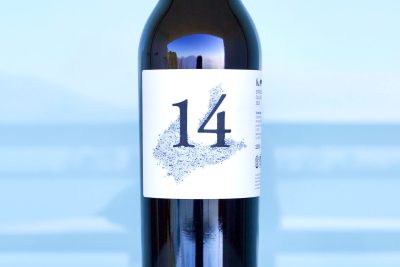
2020 Expresson Calcaire, “14” Rouge
$65.00 -

2019 Cotes du Rhone Village, Le Chasse-Coeur Rouge
$22.00 -
2021 VDF rouge Sadon 14 ‘Expression Calcaire’
$83.00 -
2022 VDF rouge Sadon 14 ‘Expression Calcaire’
$83.00 -

2020 Cotes du Rhone Village, Brusquembille Rouge
$21.00 -
2021 Cotes du Rhone Village, Brusquembille Rouge
$22.00 -
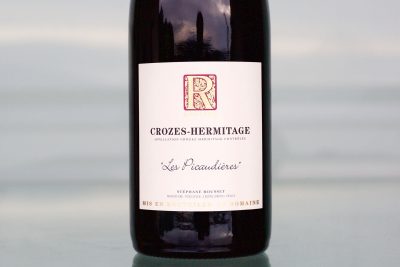
2023 Crozes Hermitage Rouge Les Picaudières
$53.00


