

You must be logged in to post a review.
Château de Tracy
Loire Valley, France


This website contains no AI-generated text or images.
All writing and photography are original works by Ted Vance.
Related material
Full Length Story
Château de Tracy’s history extends to the truly ancient; there’s written evidence of vines tended here as early as the 14th century, although in the centuries that followed, it seems to have petered out. And though its ownership has remained within the hands of two noble families, Château de Tracy’s modern-day revival was, considering the estate’s lengthy history, actually recent. The renaissance came in the early 1950s with the estate under the direction of Comte Alain d’Estutt d’Assay and his spouse, Jacqueline de Tracy. Thus, it could be said that this is when the modern chapter, the true viticultural chapter in Château de Tracy’s history, really begins. Both sides of this union brought their own unique histories to Château de Tracy; there are no princes or popes, but their stories are no less remarkable. On one side there is family history that stretches back, unbroken, to barons living in Laggan, in the Scottish Highlands, in the 14th century. On the other, there is a family tree that flirts with celebrity, with peripheral appearances from the Marquis de Lafayette, the celebrated French aristocrat and military officer, and the most famous physicist of all, Sir Isaac Newton. Today, this historic, organically operated château is run by a collective group of experienced wine professionals who channel their ideas through a local winemaker who has been at the helm for decades in pursuit of the highest quality and classically styled Sauvignon Blanc grown on Kimmeridgian marl, silex and deep clay soils.
Château de Tracy - 2025 Pouilly-Fumé ‘Mademoiselle de T’
Price: $44.00
Size: 750ml
Availability:
24+ in stock
Type of Wine: White
Grape(s): 100% Sauvignon Blanc
Style: High acid, Mineral
GROWER OVERVIEW
Château de Tracy’s history extends to the truly ancient; there’s written evidence of vines tended here as early as the 14th century, although in the centuries that followed, it seems to have petered out. And though its ownership has remained within the hands of two noble families, Château de Tracy’s modern-day revival was, considering the estate’s lengthy history, actually recent. The renaissance came in the early 1950s with the estate under the direction of Comte Alain d’Estutt d’Assay and his spouse, Jacqueline de Tracy. Thus, it could be said that this is when the modern chapter, the true viticultural chapter in Château de Tracy’s history, really begins. Both sides of this union brought their own unique histories to Château de Tracy; there are no princes or popes, but their stories are no less remarkable. On one side there is family history that stretches back, unbroken, to barons living in Laggan, in the Scottish Highlands, in the 14th century. On the other, there is a family tree that flirts with celebrity, with peripheral appearances from the Marquis de Lafayette, the celebrated French aristocrat and military officer, and the most famous physicist of all, Sir Isaac Newton. Today, this historic, organically operated château is run by a collective group of experienced wine professionals who channel their ideas through a local winemaker who has been at the helm for decades in pursuit of the highest quality and classically styled Sauvignon Blanc grown on Kimmeridgian marl, silex and deep clay soils.
VINEYARD DETAILS
This Sauvignon Blanc comes from Château de Tracy’s younger vineyard selections, with vines between 40 and 70 years old, situated on the Plateau de Vilmoy near Tracy-sur-Loire at approximately 165 meters elevation. The vineyards have southwest-facing exposures, with soils composed primarily of clay and limestone, including caillottes, alongside smaller proportions of flint and sand. Kimmeridgian limestone formations are also present in the surrounding area. Soil depth and the proportions of clay, flint, and limestone vary between parcels.
CELLAR NOTES
The grapes undergo gentle, extended pressing, with the juice separated into three fractions. Fermentation takes place in stainless steel and concrete tanks, with temperatures averaging 19–21°C, slightly higher to avoid emphasizing ester production. Fermentation is targeted to last approximately 10 days. The wine subsequently ages for a minimum of nine months on fine lees in stainless steel and concrete. Malolactic fermentation is prevented. The wine is fined and lightly filtered before bottling.
Other Château de Tracy Wines

 Château de Tracy
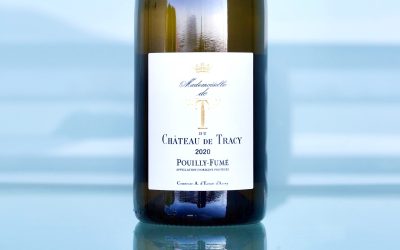 Château de Tracy
More: High acid, Mineral White wines similar to this one.
-
2019 Riesling, Heiligenstein
$110.00 -
2018 Criots Batard Montrachet, Haute Densite
$5,000.00 -
2015 Grüner Veltliner, Alter Native
$90.00 -

2019 Grüner Veltliner, “Kaferberg”
$84.00 -

2024 Viño branco “As Abeleiras” (DO Rías Baixas, Albariño)
$60.00 -
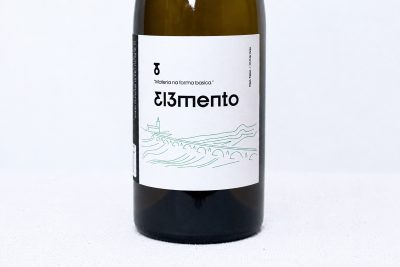
2024 Vinho Verde Sub-Região Lima Loureiro ‘El3mento’ branco
$29.00 -

2024 Sancerre blanc “Le Chêne Marchand”
$81.00 -
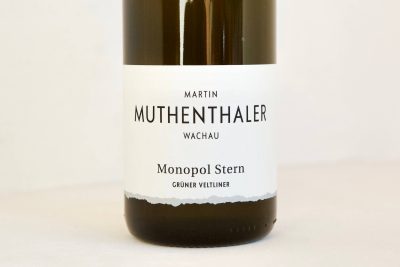
2022 Grüner Veltliner, Monopol Stern
$123.00 -
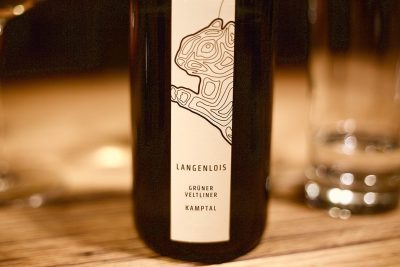
2025 Grüner Veltliner, “Langenlois”
$26.00 -
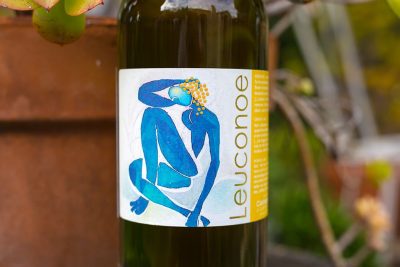
2025 Basilicata Bianco “Leuconoe”
$22.00 -
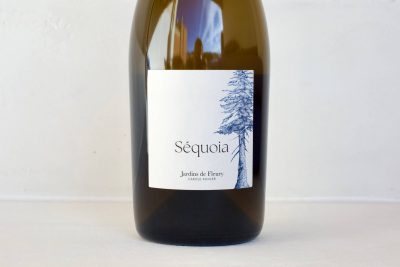
2023 Chenin Blanc, ‘Sequoia’
$34.00 -

2023 Sancerre Blanc, ‘Les Exils’
$74.00 -
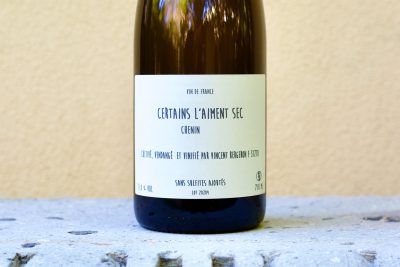
2021 Vin de France, ‘Certains l’aiment Sec’
$44.00 -

2023 Chablis, 1er Cru Mont de Milieu
$74.00 -

2024 Vinho Branco ‘Saroto’ (DOC Trás-os-Montes) (orange wine)
$26.00 -

2017 Saint Aubin Blanc, 1er Cru Les Frionnes 3-Liter
$500.00


Reviews
There are no reviews yet.