

You must be logged in to post a review.
Maneterra
Liguria, Italy


This website contains no AI-generated text or images.
All writing and photography are original works by Ted Vance.
Related material
Short Summary
Located in Liguria’s Colli di Luni region, Maneterra was founded by Claudio Felisso, a native of the area. After training at the École Nationale Supérieure d'Agronomie in Montpellier and gaining vineyard and winery experience in Toscana, Romagna, Piemonte, France, and Chile, he returned to create his own project on the hills of Castelnuovo, Fosdinovo, and Fravizzola in the Val di Magra, a warm valley shielded from the sea and the Gulf of Spezia by Monte Caprione. In this northwest-to-southeast-facing valley, Claudio focuses on cultivating Vermentino using only copper, sulfur, and organic fertilizers and treatments. In the cellar, his hand is deft; his Vermentino kissed by the salty freshness of the sea, the citrusy zest of soft Mediterranean winds, and captures the essence of Liguria’s land and its charming, generous people.Full Length Story
Located in Liguria’s Colli di Luni region, Maneterra was founded by Claudio Felisso, a native of the area. After training at the École Nationale Supérieure d’Agronomie in Montpellier and gaining vineyard and winery experience in Toscana, Romagna, Piemonte, France, and Chile, he returned to create his own project on the hills of Castelnuovo, Fosdinovo, and Fravizzola in the Val di Magra, a warm valley shielded from the sea and the Gulf of Spezia by Monte Caprione. In this northwest-to-southeast-facing valley, Claudio focuses on cultivating Vermentino using only copper, sulfur, and organic fertilizers and treatments. In the cellar, his hand is deft; his Vermentino kissed by the salty freshness of the sea, the citrusy zest of soft Mediterranean winds, and captures the essence of Liguria’s land and its charming, generous people. The only problem is its tiny quantity available!
Manaterra’s Vermentino is harvested from 3 different organic vineyards in Castelnuovo (west-facing), Fosdinovo (northwest), and Fravizzola (south) planted in the 1960s on the north side of the Val de Magra at 150-200m on a mix of sedimentary and metamorphic bedrock and topsoil.
In the cellar, it’s whole-cluster pressed and naturally fermented in steel, followed by an additional five months in vat before bottling without filtration or fining.

Maneterra - 2024 Colli di Luni Rosso
Price: $34.00
Size: 750ml
Availability:
5 in stock
Type of Wine: Red
Grape(s): 70% Sangiovese, 10% Canaiolo, 10% Ciliegiolo, 10% Buonamico
Style: Medium Body
GROWER OVERVIEW
Located in Liguria’s Colli di Luni region, Maneterra was founded by Claudio Felisso, a native of the area. After training at the École Nationale Supérieure d’Agronomie in Montpellier and gaining vineyard and winery experience in Toscana, Romagna, Piemonte, France, and Chile, he returned to create his own project on the hills of Castelnuovo, Fosdinovo, and Fravizzola in the Val di Magra, a warm valley shielded from the sea and the Gulf of Spezia by Monte Caprione. In this northwest-to-southeast-facing valley, Claudio focuses on cultivating Vermentino using only copper, sulfur, and organic fertilizers and treatments. In the cellar, his hand is deft; his Vermentino kissed by the salty freshness of the sea, the citrusy zest of soft Mediterranean winds, and captures the essence of Liguria’s land and its charming, generous people. He also produces a tiny amount of red wine led by Sangiovese.
VINEYARD DETAILS
The Rosso is harvested from 70% Sangiovese, 10% Canaiolo, 10% Ciliegiolo, and 10% Buonamico vines planted in 1960 on a south-facing, extremely steep slope of calcareous shale with shallow alluvial sandy topsoil at 150–200 meters of altitude.
CELLAR NOTES
The Rosso is spontaneously fermented with destemmed fruit and extracted by pigeage and pumpovers 2–3 times daily during the first 10 days, followed by one pump-over per day for the remainder of the 22-day maceration. Fermentation reaches a maximum temperature of 24–25°C without temperature control. After pressing, the wine is aged 18 months in a 1,000-liter concrete tank, undergoes full malolactic fermentation, is unfiltered and unfined, and receives its first sulfite addition after malolactic fermentation.

More: Medium Body Red wines similar to this one.
-

2024 Cahors ‘Un Jour ou L’Autre’
$22.00 -

2023 Nuits-Saint-Georges, 1er Cru ‘Les Pruliers’
$173.00 -

2024 Barbera d’Alba
$29.00 -

2020 Cuvee Julia, Morgon Côte du Py, Vieilles Vignes
$75.00 -

2023 Gran Canaria tinto “Tidao”
$75.00 -
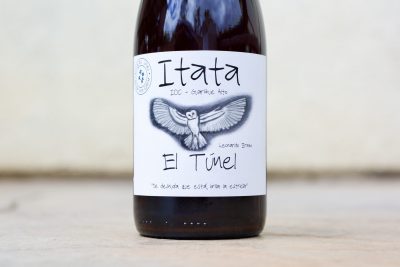
2021 Leonardo Erazo, El Tunel
$23.00 -

2024 Vino tinto ‘Dos Mouros’ (DO Ribeiro)
$45.00 -

2024 Vinho ‘Tinto’
$78.00 -
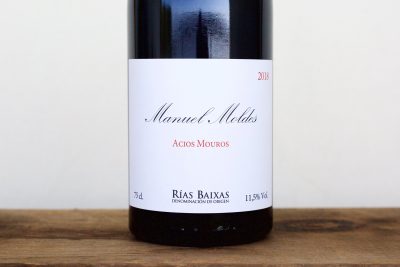
2022 Rías Baixas Red “Acios Mouros”
$42.00 -
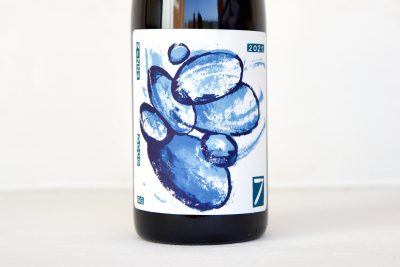
2022 Nizza (Barbera)
$50.00 -

2022 Cahors “Les Moutons”
$39.00 -

2023 Savigny-lès-Beaune 1er Cru Les Peuillets
$101.00 -
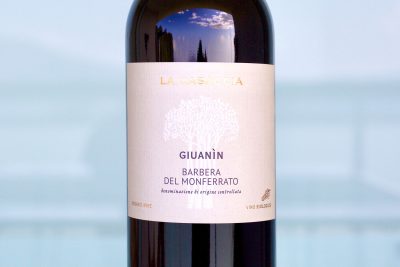
2023 Barbera del Monferrato ‘Giuanìn’
$26.00 -

2023 Coteaux Bourguignons Rouge
$44.00 -

2022 IGP Collines Rhodanienes Syrah
$25.00 -
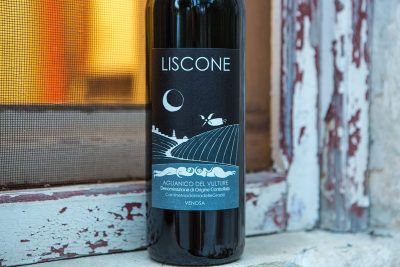
2020 Aglianico del Vulture “Liscone”
$23.00


Reviews
There are no reviews yet.