


Gneiss
(Download complete pdf here)
2023 Tegernseerhof Smaragd Crus
Wachau, Austria
Written By Ted Vance
Pregame Provocation
The last decades have challenged the wine industry’s most durable vintage theories. With improvements in vineyard and cellar craft, a deeper understanding of viticulture, and increasingly sophisticated weather forecasting, the idea that “great” wines are primarily vintage dependent is, at least in my mind, antiquated.
It’s not the vintage. It’s the grower.
Easy vintages don’t always tell us who the great growers are. It’s difficult ones that usually do. This is how it’s been as long as I can remember, and it’s just as true today as it was fifty years ago. Too many wines from critically panned or “difficult” growing seasons are automatically assumed to be inferior to those in years where the weather seemed custom-tailored for supposed greatness based on how easy, long, and uneventful the growing season was. But what is greatness by today’s standards? A wine that requires decades to reveal its potential, yet may be difficult to appreciate in the first ten years? A wine whose optimal drinking window is narrower than many less celebrated vintages but is total fire in its youth? Or is greatness also found in wines that drink beautifully young and offer immediate pleasure without sacrificing character or complexity? Just because something doesn’t stand the test of time, does that preclude it from greatness? Perhaps. But what if a wine from a humble appellation with a perceived simplicity provokes unexpected inquiry into your life choices? Could that be a great wine?
The reality is that the overwhelming majority of wines produced today—I would posit at least 90 percent of them—will never see their tenth birthday. For those wines and the people who drink them, a vintage that expresses itself earlier may be every bit as successful as one built primarily for long-term aging.
To believe that a vine produces its most compelling fruit during a long, vacation-like growing season, compared to when it struggles against the odds but still delivers? From a cinematic point of view, that story wouldn’t make for a good movie. The most admirable and compelling storyline is the unlikely success that no one saw coming.
While the ideal seasons are easy to understand and appreciate, they don’t always produce the most compelling wines. They often homogenize them. A season that appears destined for greatness can produce wines that are merely very good, but also sometimes too predictable to remain endlessly fascinating. By contrast, a season written off as difficult can sometimes surprise us with depth of character and unparalleled beauty. Imperfections are often where the memorable personalities reside.
Maybe difficult vintages sometimes fascinate me as much as perfect ones because I can relate to them as a person. We all carry scars that become part of who we are, and growing seasons carry their own: frost, hail, drought, heat waves, long cold spells, relentless rain, mildew pressure. We often hold the vintage accountable for them as if some inevitable character flaw before we’ve even considered whether they actually diminished the wine. But perhaps they’re only imperfections if you’re looking for a one-size-fits-all expression of greatness. What one person sees as a flaw, another may value above everything else. The very thing that moves a wine away from textbook perfection is exactly what can make it even more compelling.
Perhaps this is why so many of us remain captivated by wine in the first place. It mirrors something fundamental about being human. Is there anything particularly inspiring about what appears to be effortless success? What moves us is something that exceeds expectations despite obstacles. It’s the imperfect vintages and the grind of the winegrower in the face of adversity that keeps wine fascinating—the underdog few picked to one day be the champion. Brunson.
Most wine critics traditionally side with speculation on greater longevity and power—some sort of legacy concern? Yet given how little of what’s produced will stay long in the cellar, perhaps the more relevant question is not how long a wine can age but how well it performs while people are actually drinking it. Of course, no single bottle or tasting tells the entire story. Perhaps greatness should be measured not only by a wine’s potential, but also by how consistently it performs over the course of its life. That isn’t to suggest greatness is entirely subjective. A high school basketball player doesn’t become greater than Michael Jordan simply because his father believes he is. Some wines are undeniably greater than others. The more interesting question is whether we’ve become too narrow in how we define greatness in the first place.
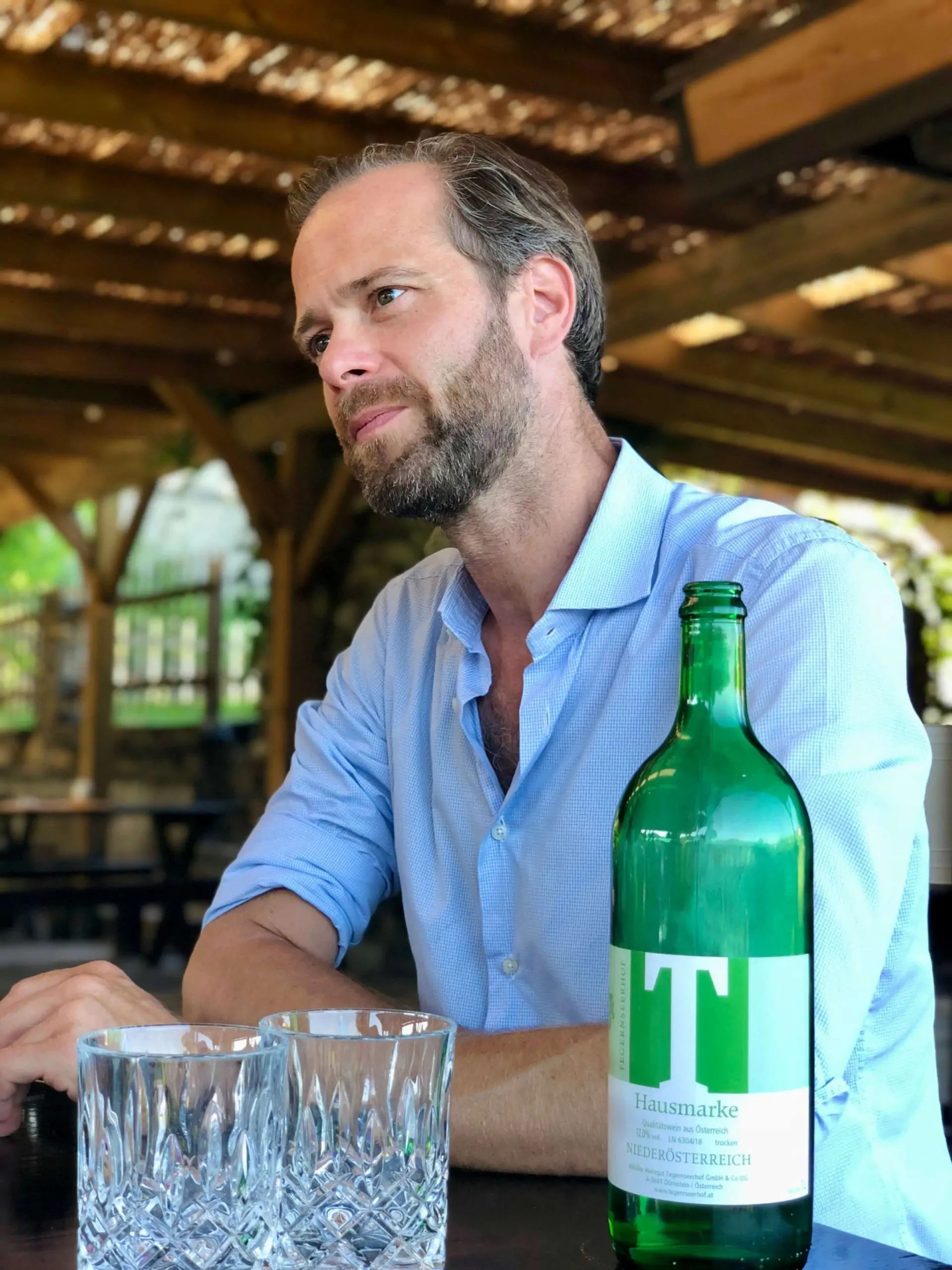
Martin Mittelbach
Vintage 2023 In Context | A Broken Thumb
The headline about 2023 in a good portion of Europe should not be that it was hot, but that so many of the wines don’t immediately signal a warm vintage.
Following a very hot 2022, 2023 was also hot but in a different way. I continue to contend, at least in July of 2026, that 2022 white wines across much of a scorching European season are often unfairly dismissed. From Austria, through Germany, across northern France, and all the way over to Galicia, the 2022 vintage produced a formidable set of dynamic, structured and stout yet fresh white wines in the northern European regions despite the heat and drought. My experience since their release is that in the first months, the jury was still out, but shortly after, they packed on dense muscle without abandoning the voice of their terroirs. The reds are equally surprising in most parts: charming, accessible, lifted, and their depth and seriousness tucked in for only an hour or so after opening.
In 2021, Austria and Germany shared much of northern Europe’s cool, wet growing-season pattern, with lower sugars and higher acidity. A notable exception was Italy, whose weather patterns were more varied but were generally warmer and drier, with many regions facing heat and water stress rather than disease pressure. The main cause of the contrast was the Alps, which shield much of Italy from the cool, moisture-laden Atlantic systems that dominated northern Europe while leaving much of the peninsula more exposed to the warmer Mediterranean climate and periodic incursions of hot North African air.
These three vintages could hardly be more different, except that in the right hands they all produced excellent wines.
In 2021, a cool and relatively wet growing season and a long, stable harvest period produced wines with exceptional acidity, moderate alcohol, and striking precision. This is the most compelling execution of an Austrian Riesling and Grüner Veltliner vintage in my lifetime. Martin believes one of the defining advantages of 2021 was not simply the cooler growing season, but the unusually low harvest temperatures.
“For me, the 2021 vintage, one key factor was that temperatures were remarkably cold at harvest time for the individual vineyard sites, which meant we could allow significantly more skin contact. Beyond the climatically driven aromatics, this adds another layer of depth.” —Martin Mittelbach
The wines across almost all growers seem to have hit their apex in 2021. In 2022, after a mild winter and strong mildew pressure in early summer, the Wachau experienced prolonged heat and severe drought through much of July and August, with relief arriving only through late-season rains. The resulting wines are generally more concentrated, powerful, and structured, but complex and balanced.
“2022 had this incredible elegance—really everything that 2021 and 2020 couldn’t deliver. But also with expressive spice that you really notice now after a few years in bottle.” —Martin Mittelbach
In 2023, abundant spring rainfall replenished water reserves and promoted vigorous canopy growth, both of which resulted in greater mildew challenges. A warm summer accelerated ripening without the severe hydric stress seen in 2022. Unlike 2022, vines in 2023 remained physiologically active through much of the growing season rather than drought stress leading the vines to shut down and the fruit to concentrate. This allowed for a longer ripening period. Despite being another warm vintage, the wines frequently show greater freshness, aromatic definition, finer lines and ethereal lift.

Dürnstein
I’m generally a fan of the 2023s. Against the odds, many of the white and red wines from the regions we at The Source focus on, from Austria westward through parts of Italy, France, and into northern Iberia, rendered wines of lift and elegance. The Wachau and its neighboring Riesling and Grüner Veltliner regions fit squarely within that narrative. They hint at the striking clarity of 2021, though without the same cut, icy freshness and core density. And while 2023 was warmer than 2022 across much of Europe, it’s remarkably difficult to taste that in the glass. The wines show a level of freshness, finesse, and composure that seems to contradict the expectations for such a hot year.
“2023 was overall another warm year, but it shows itself more shiny and open—almost like everyone’s darling. These are monumental wines with a particular ease of drinking.” —Martin, Mittelbach
If 2022 and 2023 prove anything, it’s that temperature alone has become an increasingly poor predictor of both wine style and wine quality. The old habit of reducing a vintage to “hot,” “cold,” “perfect,” or “difficult” no longer tells us very much about what will ultimately be in the glass.
“Overall though, it has to be said that with individual work in the vineyard, you can exert enormous influence. Above all, we work with ripening-delay measures. This way we simply achieve lower sugar accumulation, which results in lower alcohol levels and very likely cooler harvest temperatures as well. This brings a naturalness and lightness to the wines, even in years where they also carry considerable power and body.”
In other words, the grower is no longer simply reacting to the vintage. The grower is actively shaping how the vintage is translated into the bottle.
Aside from water availability, vine function, disease pressure, and the timing of rainfall, crop load is another important variable that often receives less attention than it deserves. A vine can often moderate the effects of heat by distributing ripeness across a larger crop. Lower yields may produce more concentrated wines, but with today’s better understanding of viticulture combined with rising temperatures and extreme weather events, concentration and quality are further from synonymous than in the past.
More broadly, I suspect that our traditional tendency to classify vintages as hot, cold, perfect, or difficult is becoming increasingly outdated. Every season leaves its fingerprint, but that fingerprint is rarely the result of temperature alone. It’s equally, if not more, the imprint of the grower and their foresight, vigilance, and the countless decisions made throughout the growing season. Indeed, there is always a reason why a wine tastes the way it does beyond the hand of the grower, and increasingly those reasons resist simple explanations based on whether a vintage was considered hot or cold.
Our Protagonist | Martin Mittelbach
Martin continues his ascent in the Wachau’s pecking order. Unlike many of his famous friends and winemaking colleagues who took over their family estates in their thirties and forties, he’s been in control of his family’s winery since his mid-twenties. Many his age (now in his mid-fifties but with the spirit and energy of a twentysomething) still have parents who claim to be retired but don’t completely let go of the stylistic steering wheel in the company business. This is understandable given that the oldest generation was the one who recovered their towns and the wine industry after World War II. They understood war and poverty and had to do the heavy lifting to rebuild their culture and once again earn the world’s respect. It’s hard to let that go.
Martin’s embrace of organic farming in the closing of the 2010s set him apart from much of the Vinea Wachau’s ruling class. Though Tegernseerhof itself dates back more than a thousand years, Martin’s a fifth-generation winegrower and his philosophical compass always pointed more toward natural farming. Even though he farmed conventionally for years, a walk through the vines in the spring when the first herbicide sprays across the entire region show a clearer picture of what is going on in each vineyard, his vineyard rows remained green as many fully turned to toxic yellow.


Map image taken from austrianwines.com
Like most producers, Tegernseerhof’s Riesling vineyards are also mostly located on the steep upper terraces composed of gneiss. His Grüner Veltliners, however, don’t follow the typical settings dominated by lower loess and alluvial terraces as in much of the Wachau and neighboring regions. He has three Grüner Veltliner crus on gneiss bedrock with very little loess influence: Ried Höhereck and Ried Schütt, bottled as Smaragd, while the Federspiel is Ried Superin. His range is also distinguished by his exclusive use of steel vats and vigorous sorting to remove any density-adding botrytis and slightly shriveled and sunburnt clusters that honey up the wine.
Die SMARAGD
Martin makes glorious Smaragd wines for those who go for a straighter, more focused body and texture. Fluidity is one of his hallmarks and one of Riesling’s most important attractions, and his most recent vintages find that greater fluidity. This is especially important at this time, when wines can go full monster under the sun after a few extra days left on the vine. I may again take the liberty to partially credit this to an even softer, more natural approach in the vineyards. (If presented with two peaches of the same type and same ripeness level, one organic and one conventional, do you think people can tell the difference? Beyond the sugar, acid and sweetness, I believe the chances are high that they would. It’s the same with grapes.)

Loess in hand and under the microscope
Ried Loibenberg is the main hill of the north side of the east end of the Wachau and probably the most photographed series of vineyards, as they are the first to behold coming from the direction of Vienna. From a terroir perspective, its diversity is due to its size, both vertically and in length, and the variation of bedrock and topsoil. But one consistent characteristic is that it’s one of the warmest hill slopes in the Wachau. It has only a few ravines that pass through it, which creates a relentlessly hot mountain face compared to many others poking out toward the Danube. Usually, when there is a substantial ravine cutting through a hill, the hills take on a different name and have wines with different expressions. Rieslings sit in the upper section of the hill on gneiss bedrock, while mid-slope and toward the foot of the hill are the Grüner Veltliners, though this is not always the case. Loibenberg is almost always the first to be picked each season for the Smaragd wines, and Martin picks even earlier than most. He has many parcels scattered around the hill (as most growers do), with some Grüner Veltliner vines at the extreme top and Riesling closer to the bottom, offering him a wide window in which to pick and a wider range of complexities in the final wines.
Just to the west of Loibenberg are the Grüner Veltliner sites of Martin’s Ried Schütt and Ried Höhereck. Both sit partially inside a ravine (known as the Mental Gorge, or Mentalgraben) where water erosion separated them from Loibenberg. The combe floods with cold air from the Waldviertel forest behind and above the vineyards, which contributes to its tension and balances out its deep power. With an unusual appearance for a great cru site, Schütt is relatively flat with only slight terracing below the steeper Höhereck. It’s composed primarily of hard orthogneiss bedrock and decomposed gneiss topsoil with a mixture of variously-sized unsorted gneiss rocks and sand deposited by the former water flow.

Replanted in 1951, Tegernseerhof’s Höhereck is the Grüner Veltliner parentage of many Tegernseerhof vines in the area, a rarer Grüner Veltliner that grows almost exclusively on the acidic metamorphic rock, gneiss. Its beneficial southeast exposure in the ravine, just peaking out of it, is influenced by forest-fresh and mountain winds and a sun that sets behind the hills early, even in late spring, through the summer and into autumn. However, Martin insists that the most important element of Höhereck is its genetic heritage of massal selections. This half-hectare (1.25-acre) vineyard has been a growing field for centuries for ancient Grüner Veltliner, thus contributing to the complexity of this wine and Martin’s entire range of Veltliners, with all new plantings made with its genetic material. Höhereck produces dynamic and deeply complex wines that still manage to show great restraint, perhaps due to the great abundance of layers that unfold once the bottle is open.
Martin’s Ried Steinertal Riesling Smaragd comes from one of the most talented small Riesling sites in all of Austria. Its aromas beam from the glass with enticing, full-of-energy, high-toned mineral impressions, due to its pure gneiss rock, spare topsoil, and its heat-trapping amphitheater shape with steep ravines on both sides that create a teeter-totter of hot days and the cold nocturnal mountain air. Martin’s preference for earlier picking and rigorous sorting to remove any grapes with concentrated botrytis further encourages its crystalline yet robust expression.

Kellerberg
If one were to ask a knowledgeable wine professional about the greatest vineyards in Austria, the Wachau’s Kellerberg would likely be mentioned in their first breath. Tegernseerhof’s Ried Kellerberg Riesling Smaragd is the fullest Riesling in their range, surely vying for the top spot with Steinertal. Just to the west of Höhereck, it similarly faces mostly southeast, an aspect that provides good morning sun exposure and an earlier sunset than the neighboring Riesling vineyards with more southerly and sometimes western exposures, such as Steinertal and parts of Loibenberg. Kellerberg is also exposed to a large open ravine to the east through which a rush of cool air blows at night. The aspect and exposure of this ravine, along with mostly unplanted hills just to the west, let Kellerberg reach full ripeness without imparting excessive fruitiness. Tegernseerhof has six parcels within its boundary with a range of bedrock and topsoil conditions: loess, which brings richness and breadth, while gneiss imparts tension, focus, lift and depth. Even more important than the nuances is the way this wine makes you feel: its energy, profound reserves, and at the same time, its robust generosity. Kellerberg is formidable and indeed comfortably sits among the world’s great vineyards.
